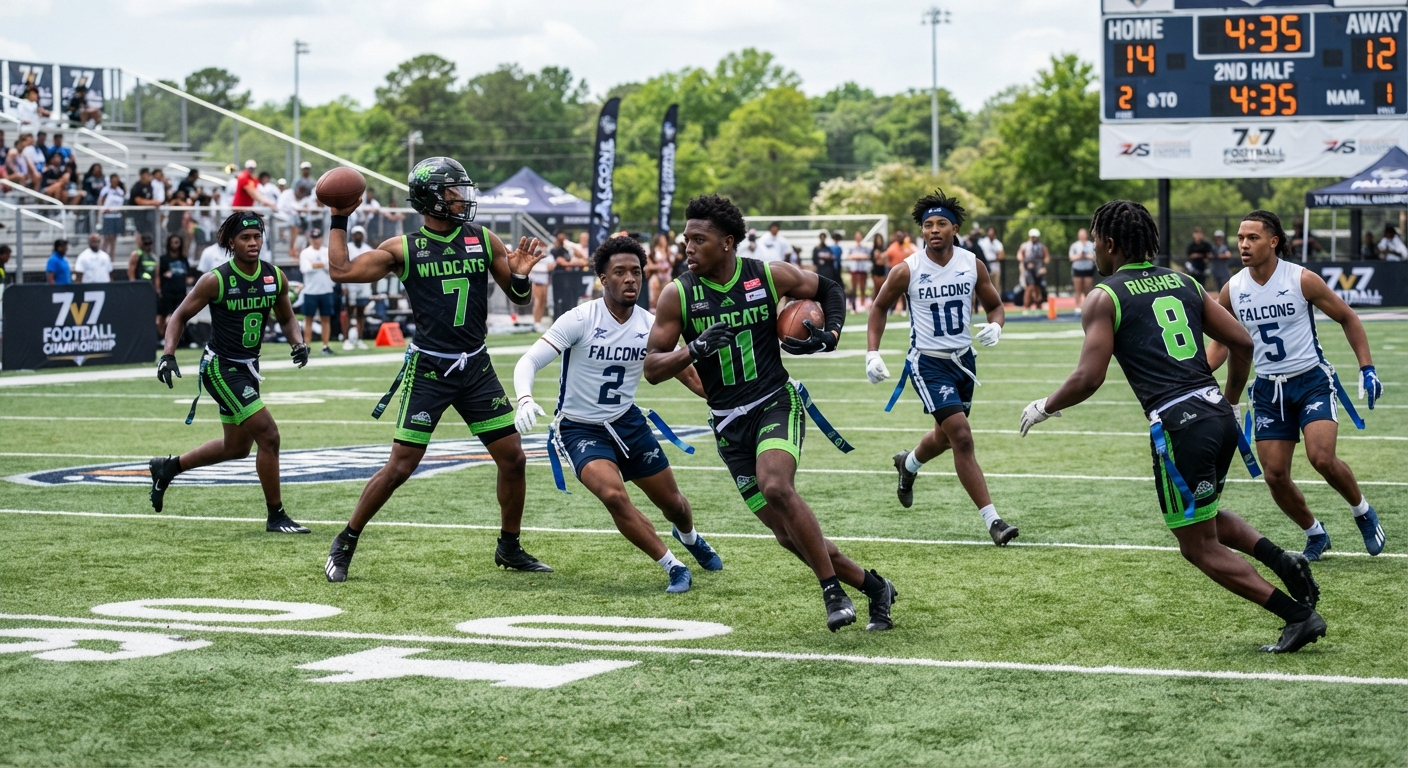
How to Order Custom 7v7 Football Uniforms for a Tournament: A Coach's Planning Guide
Preparing for a 7v7 football tournament involves more than developing plays and organizing practice schedules. Coaches also need to finalize rosters, assign player numbers, collect uniform sizes, and make sure every athlete has the correct apparel before competition begins.
For teams traveling to multiple tournaments, these responsibilities can become complicated quickly.
Ordering custom 7v7 football uniforms requires careful planning, especially when players join late, teams have multiple age divisions, or tournament organizers enforce specific uniform rules.
The good news is that a structured ordering process can help prevent many common problems.
This guide explains how coaches, athletic directors, and 7v7 organization managers can prepare their uniform orders, choose appropriate apparel, and coordinate production around tournament schedules.
1. Start With Your Tournament's Uniform Requirements
Before choosing colors or approving a design, review the uniform requirements for your upcoming competition.
Different 7v7 tournament organizers may have different rules concerning jersey numbers, colors, apparel construction, and permitted accessories.
Check Jersey Number Requirements
Some competitions specify where numbers must appear or how easily they must be identified.
Confirm whether numbers are required on the front, back, or both sides of the jersey.
Also review any restrictions concerning number formats or duplicate numbers.
Confirm Jersey Color Rules
Tournament organizers may require teams to have contrasting jersey colors.
If your organization participates in multiple events, check each tournament's rules before deciding whether one jersey design is sufficient.
Review Shorts Requirements
Certain competitions may restrict pockets, exposed drawstrings, or other features.
These requirements can differ by event.
Do not assume that ordinary gym shorts automatically meet tournament rules.
Verify Equipment Restrictions
Some events have rules concerning gloves, headwear, mouthguards, and other accessories.
Although these items may not be part of your uniform order, coaches should review the complete equipment policy.
Coach's Tip: Save the tournament's uniform requirements alongside your roster spreadsheet. This makes it easier to verify compliance before approving production.
2. Decide What Your 7v7 Uniform Package Should Include
A typical 7v7 football uniform package may include a custom jersey and athletic shorts.
However, teams have different needs depending on their competition schedules and budgets.
Essential Package: Jersey and Shorts
For many teams, one custom jersey and one pair of matching shorts provide a practical starting point.
This option may be suitable when the tournament allows one primary uniform color.
Two-Jersey Package
Teams participating in events that require contrasting colors may consider ordering two jerseys.
For example, a team could choose a navy jersey and a white jersey with matching numbers and logos.
Both jerseys might be worn with the same shorts if the competition rules permit.
Reversible Jersey Option
A reversible jersey provides two wearable color combinations in one garment.
This may simplify uniform management for certain teams.
However, reversible construction, fabric weight, and available customization options should be reviewed before ordering.
Optional Team Apparel
Organizations may also want matching performance shirts, hoodies, warmup apparel, or bags for travel and team activities.
These products can help create a coordinated appearance, but they should be considered separately from required game uniforms.
Prioritize essential competition apparel before adding optional merchandise.
3. Build Your Final Roster Before Submitting the Order
One of the most important steps in ordering custom uniforms is preparing an accurate player roster.
A well-organized roster reduces confusion and helps the supplier understand exactly what needs to be produced.
What Information Should Your Roster Include?
Create a spreadsheet containing these fields:
| Field | Example |
| Team | 14U Blue |
| Player name | Jordan Smith |
| Jersey number | 12 |
| Jersey size | Adult Medium |
| Shorts size | Adult Small |
| Uniform quantity | 1 |
| Special instructions | None |
For organizations with multiple teams, include the age division and team name on every worksheet.
Assign Player Numbers Early
Avoid waiting until the final ordering day to assign numbers.
Ask coaches to verify that every player has the correct number and that the assignments meet competition rules.
If a player requests a number change after production begins, a replacement garment may be necessary.
Keep One Final Roster Version
Multiple spreadsheets with different numbers and sizes can create confusion.
Designate one file as the approved final roster.
If changes become necessary, clearly identify the updated version and communicate exactly what changed.
Plan for Late Additions
7v7 rosters may change before a tournament.
Ask your uniform supplier about reorder requirements, production timing, and any minimum quantities for additional jerseys.
Do not assume late additions can be completed within the original delivery schedule.
4. Choose Jersey and Shorts Sizes Separately
One common mistake is assuming that players should receive the same size in both garments.
A player who wears an adult medium jersey may prefer adult small shorts or another combination.
Measure the Jersey
Review the supplier's chest width, body length, and fit recommendations.
For example, if a jersey measures 21 inches across the chest while laid flat, its approximate garment chest circumference is 42 inches.
However, this is a garment measurement, not a recommended body chest measurement.
Players need appropriate room for comfortable movement.
Measure the Shorts
Consider waist measurements, hip measurements, garment length, and the preferred fit.
Shorts should allow players to sprint, cut, and change direction without unnecessary restriction.
Don't Rely Only on Age
Players in the same 12U, 14U, or 15U division may have different body proportions.
Assigning everyone the same size based on age can lead to poor fit.
Use Sample Sizes When Available
A size kit can help players compare garments before ordering.
If possible, have athletes try sample jerseys and shorts while performing simple football movements, such as raising their arms, jogging, and changing direction.
This helps identify fit concerns before production.
5. Choose Fabrics Suitable for 7v7 Football
7v7 football involves repeated sprints, passing routes, defensive coverage, and quick changes of direction.
The uniform should accommodate these movements.
Polyester Performance Jerseys
Polyester is commonly used in athletic uniforms.
Depending on its construction, it may provide lightweight comfort, shape retention, and moisture-management properties.
However, not all polyester fabrics have the same weight, breathability, or texture.
Mesh Construction
Some jerseys use mesh materials or ventilated panels.
These may improve airflow depending on their construction.
Ask your supplier about the available fabric options and their intended use.
Stretch and Movement
Some garments incorporate spandex or use stretch-knit construction.
This may provide additional flexibility.
However, the garment's cut, stitching, and overall fit are just as important as fabric stretch.
Consider Tournament Conditions
Outdoor tournaments may involve high temperatures, direct sunlight, wind, or rain.
Select apparel appropriate for the expected conditions, and follow tournament heat-safety and hydration procedures.
Performance fabric alone does not prevent heat illness.
6. Design Jerseys That Officials and Coaches Can Read Easily
A visually striking uniform is useful only if important details remain clear.
Player identification should be one of your main design priorities.
Use High-Contrast Numbers
Numbers should stand out against the jersey background.
For example, white numbers on navy fabric are generally easier to distinguish than dark blue numbers on a similar navy background.
Avoid placing complex patterns behind player numbers.
Keep Team Branding Consistent
Use the same approved logo, lettering style, and primary colors across the team's uniforms.
If your organization operates multiple age divisions, consistent branding can help create a recognizable identity.
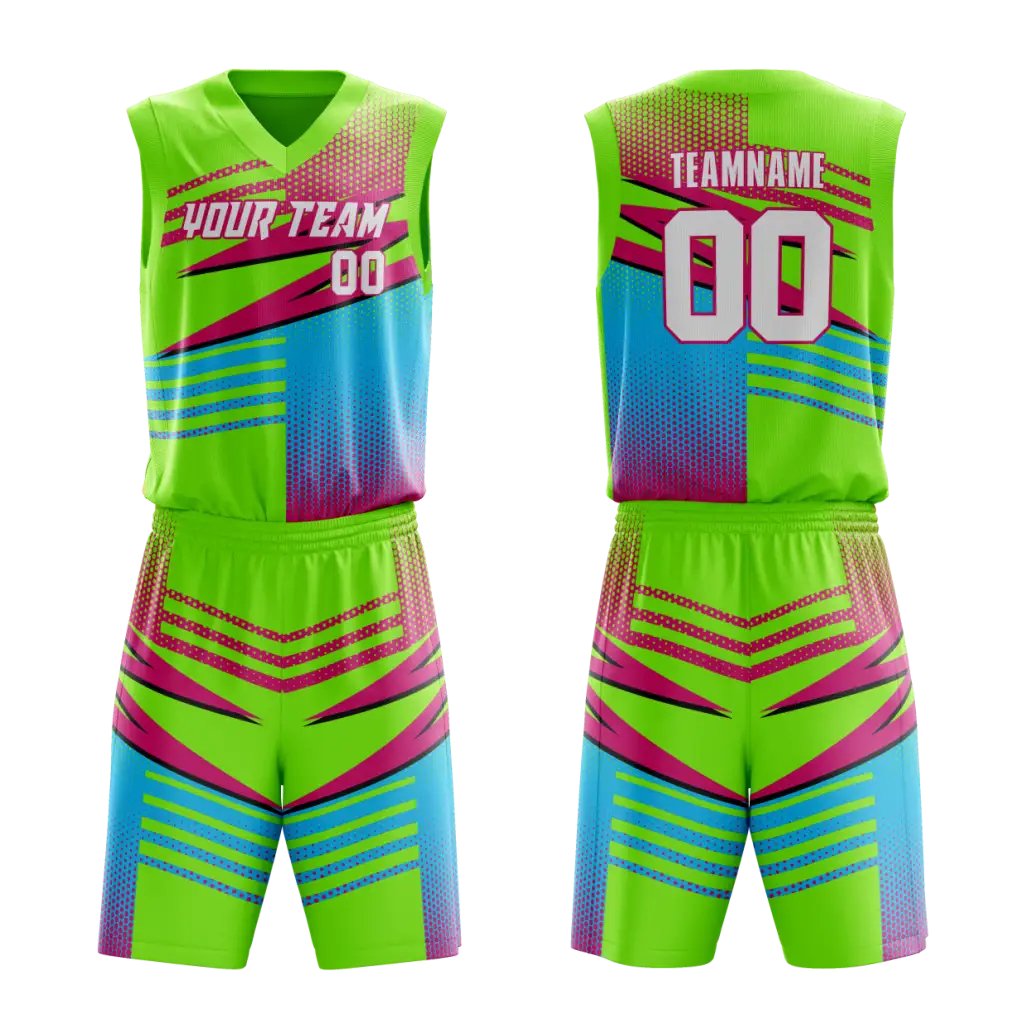
Review Both Front and Back
A mockup should show every required view.
Check the front logo, back numbers, sleeve graphics where applicable, and any other personalization.
Consider Sublimation for Detailed Designs
Sublimation allows multicolor graphics to be incorporated into compatible polyester fabrics.
It can be useful for gradients, patterns, and coordinated team designs.
However, printed colors may differ from digital mockups because of fabric characteristics, screen settings, and production processes.
If your organization requires specific colors, discuss color references or physical sampling before production.
7. Create a Tournament Uniform Ordering Timeline
Custom uniforms require time for design approval, sizing confirmation, production, and shipping.
A practical timeline should begin well before the first tournament.
Six to Eight Weeks Before the Tournament
Start planning your uniform requirements.
Confirm the tournament rules, estimate player quantities, select potential uniform styles, and contact your supplier.
This is a planning recommendation, not a required production lead time.
Four to Six Weeks Before the Tournament
Collect sizes, assign player numbers, and review artwork.
If your supplier offers samples, allow time for players to evaluate them.
Confirm the supplier's actual production estimate before setting your final ordering deadline.
Two to Four Weeks Before the Tournament
Ideally, the order should already be approved and progressing according to the agreed schedule.
Ask for an update on production and shipping arrangements.
Do not assume a late order can be expedited.
Before Tournament Week
Arrange uniform distribution early enough to verify that players received the correct items.
Review names, numbers, sizes, and quantities against the final roster.
If something needs attention, communicate it promptly.
Important: These time windows are suggested planning milestones. Actual production and delivery schedules depend on the supplier, order complexity, quantity, and shipping arrangements.
8. How to Manage Uniform Orders for Multiple 7v7 Teams
Larger organizations may operate several teams across different age divisions.
For example, one program might manage 10U, 12U, 14U, and 15U teams.
Without a consistent ordering system, errors can become more likely.
Use Separate Team Worksheets
Maintain one master workbook with a separate worksheet for each team.
Include the same information fields across every worksheet.
Assign One Organization Coordinator
Choose one representative to communicate with the supplier.
Individual coaches can review their team rosters, but the organization coordinator should submit the consolidated final order.
Confirm Design Differences
Some organizations use the same uniform design for every age division.
Others use different colors or graphics.
Clearly identify which design belongs to each team.
Review Quantities Before Approval
Compare the total garment quantity against the number of players.
For example, if a team has 15 players and each player receives two jerseys, the jersey quantity should be 30.
Remember to account for any approved coach apparel or additional garments separately.
Keep a Record of Approved Mockups
Save the final artwork for each team.
This can help when discussing future reorders or checking design consistency.
9. Common Mistakes That Can Delay a 7v7 Uniform Order
Many uniform ordering problems can be reduced through better preparation.
Submitting Incomplete Rosters
Missing sizes or numbers can prevent an order from being finalized.
Review every roster field before submission.
Changing Numbers After Approval
Late changes may require new artwork or additional production.
Finalize numbers early.
Ordering Without Checking Tournament Rules
A uniform may look attractive but fail to meet competition requirements.
Confirm rules before production.
Assuming Jersey and Shorts Sizes Match
Collect garment sizes separately.
Approving Only One Mockup View
Review the front and back, along with any additional decorated areas.
Ignoring Shipping Time
Production completion and final delivery are not the same milestone.
Confirm shipping arrangements and allow time for distribution.
Waiting Until the Last Minute
A rushed order may limit available choices or increase costs.
Begin planning early and ask your supplier about realistic delivery options.
10. Final 7v7 Football Uniform Ordering Checklist
Before approving your order, confirm:
- Tournament uniform rules have been reviewed.
- Every team and age division is identified.
- Player names and numbers are correct.
- Jersey and shorts sizes are collected separately.
- Required jersey colors are finalized.
- Fabric and garment styles are approved.
- Front and back mockups have been checked.
- Optional apparel is listed separately.
- Final quantities match the approved roster.
- Production and shipping arrangements are confirmed.
- The planned delivery date allows time for distribution.
A final review can prevent unnecessary complications as tournament day approaches.
Frequently Asked Questions About Custom 7v7 Football Uniforms
What is included in a custom 7v7 football uniform?
A typical 7v7 uniform includes a jersey and athletic shorts. Additional jerseys, warmup apparel, or accessories may be available depending on the supplier and selected package.
Can 7v7 teams use reversible jerseys?
Some teams use reversible jerseys to provide two contrasting colors. Confirm that the garment meets the tournament's requirements before ordering.
What fabric is best for 7v7 football jerseys?
Polyester performance fabrics are commonly used. The appropriate choice depends on weight, breathability, fit, construction, and intended use.
Do 7v7 football shorts need to be pocketless?
Some tournament organizers prohibit pockets or other garment features. Always review the rules for your specific competition.
Can teams add custom player names and numbers?
Many custom uniform suppliers offer player names and numbers. Confirm the available options and any applicable tournament restrictions before ordering.
How early should we order custom 7v7 uniforms?
Begin planning several weeks before your tournament. Confirm the actual production and shipping timeline with your supplier before committing to a delivery date.
Can organizations order uniforms for multiple age divisions?
Yes. Coordinating several teams through one master roster and approved artwork system can help simplify ordering.
Final Thoughts: Better Planning Makes Tournament Preparation Easier
Custom 7v7 football uniforms should represent your team while providing a comfortable, practical fit.
But a successful uniform order depends on more than design.
Accurate rosters, correct sizing, clear player numbers, tournament-rule compliance, and realistic delivery planning are all essential.
Coaches and organization managers who prepare these details early can reduce unnecessary last-minute complications.
Whether you're ordering for one team or an entire 7v7 program, a structured approach can make the process more manageable.
Order Custom 7v7 Football Uniforms With USX Sports
Preparing for an upcoming 7v7 football tournament?
USX Sports provides custom football uniforms and team apparel for youth teams, schools, leagues, and athletic organizations.
Our team can help you review jersey and shorts options, coordinate team colors, prepare custom designs, and organize uniform details for multiple age divisions.
Whether you need one team set or a larger organization order, we're ready to discuss your requirements.